A precise alternative to crowns.
Inlays and onlays are custom-made restorations used to repair teeth with moderate damage or decay. Too damaged for a filling, but not damaged enough to need a crown.
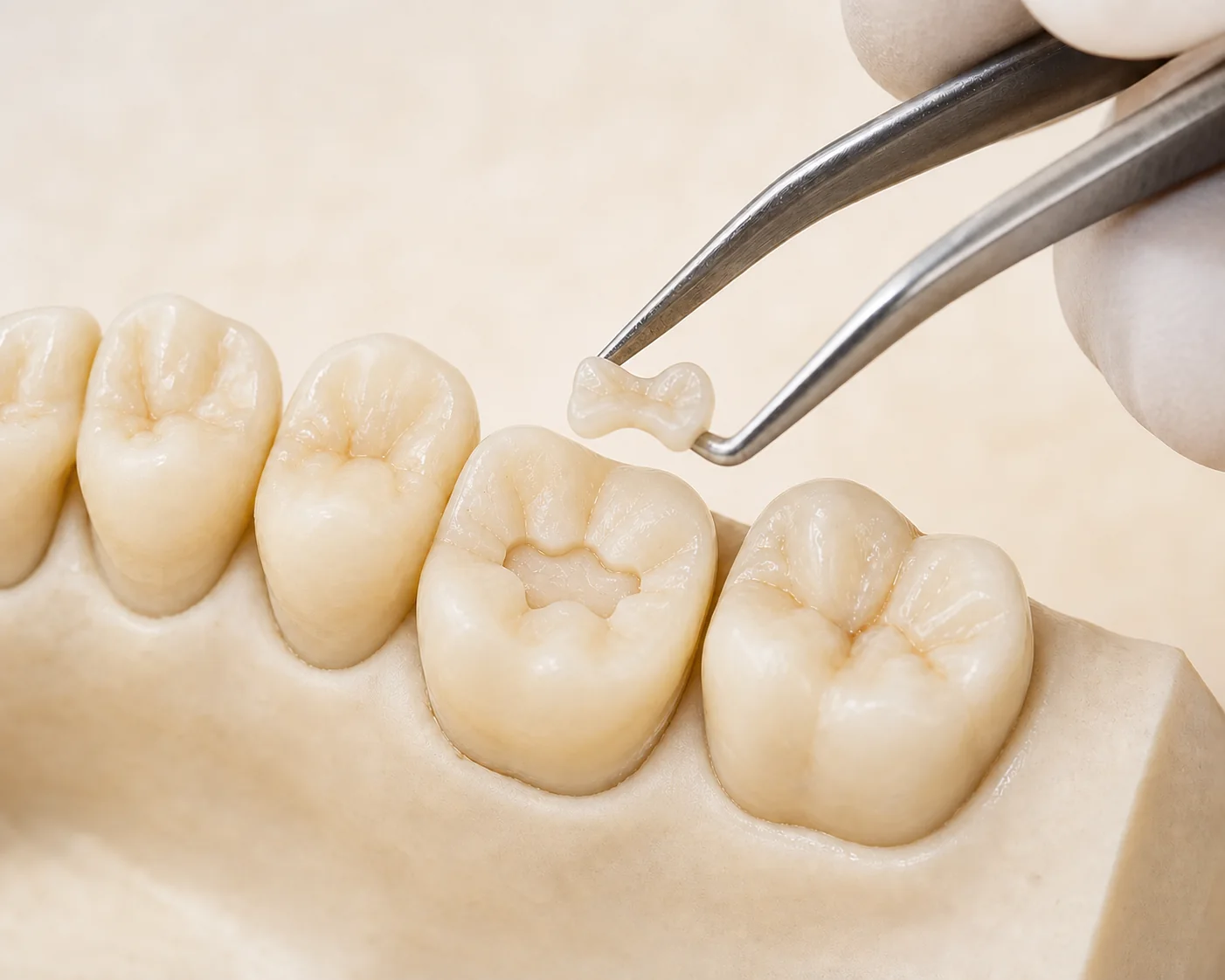
What are they?
Lab-created restorations for teeth that need more support than a standard filling. Inlays fit within the tooth's chewing surface, while onlays extend over one or more cusps.
The treatment suits teeth with moderate decay, large old fillings, or cracks, particularly molars and premolars where durability matters most.
The benefits
- Preserves more of your natural tooth than a crown
- Strength and longevity where it matters
- Prevents further damage to the tooth
- A seamless, natural-looking result
Your restoration, step by step.
Clean & impression
The affected area is cleaned and we capture an impression, either digitally or physically.
Custom fabrication
Your restoration is fabricated in a laboratory to match the tooth precisely.
Bond & polish
At a second visit, the restoration is bonded securely and polished for a seamless finish.
Chosen for your bite.
Porcelain
Tooth-coloured and natural-looking, ideal where appearance matters.
Composite resin
A natural-looking, conservative option bonded directly to the tooth.
Gold
Excels in durability, particularly for patients with strong bite forces.
Common questions.
What's the difference between an inlay and an onlay?
An inlay fits within the tooth's chewing surface. An onlay extends over one or more of the tooth's cusps for greater coverage.
How long do they last?
With good care, inlays and onlays can last 10 to 15 years or more, supported by consistent oral hygiene and regular dental visits.
How many visits does treatment take?
Usually two. One to prepare and take the impression, and one to bond the finished restoration.
Not sure crown or inlay?
Book a consultation and we'll recommend the most conservative option for your tooth.